
Food packaging MOQ guide for wholesale and custom orders
A food-packaging MOQ is not one universal number. It belongs to an exact model, material, colour, artwork version, pack configuration and production route, so buyers should request the basis behind the quantity.
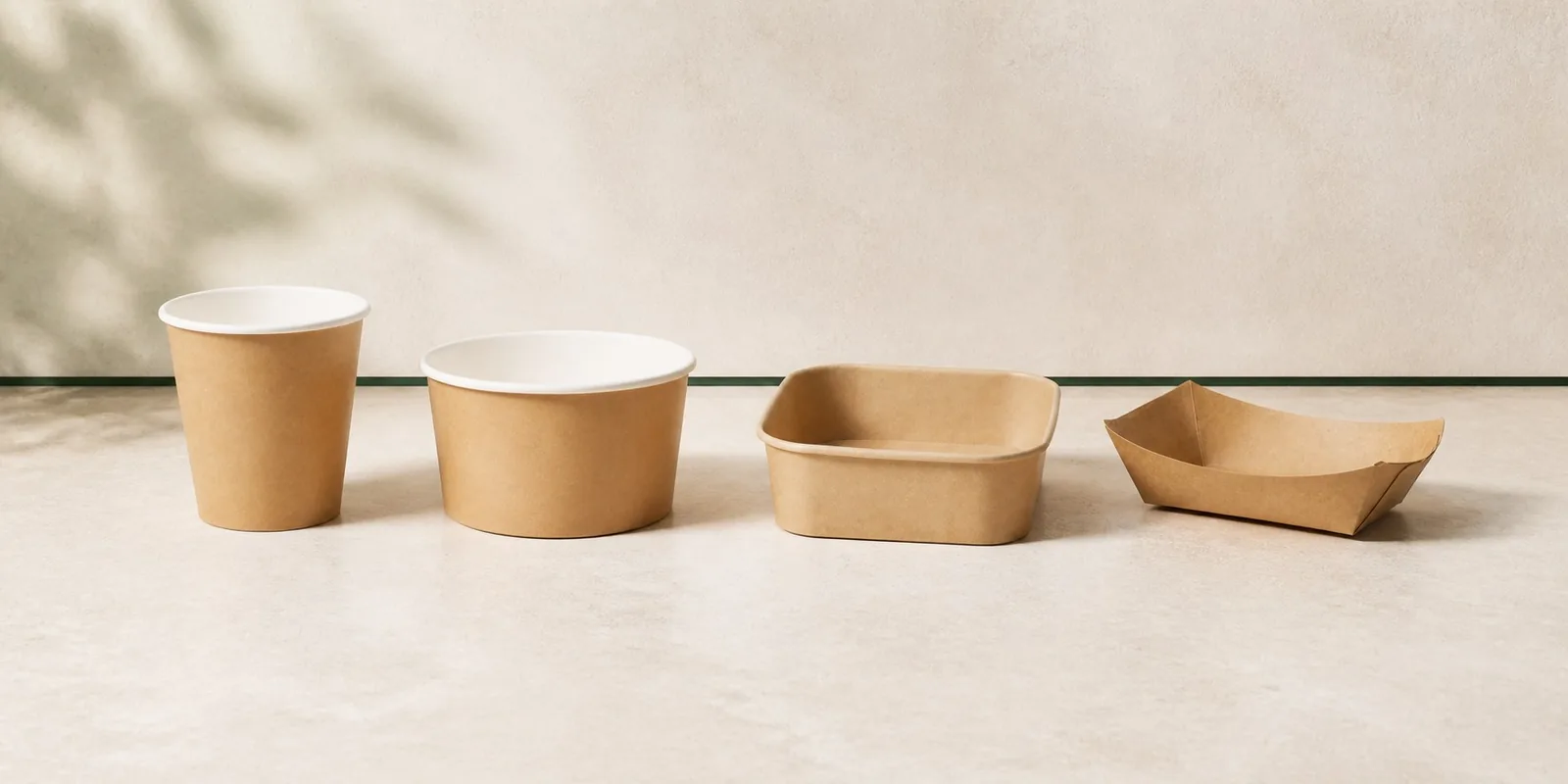
What does MOQ mean in a packaging quotation?
MOQ is the minimum quantity a supplier is prepared to quote or produce under a defined set of conditions. The unit may be pieces, packs, cases, a production batch or another commercial basis, so the quotation should name the unit explicitly.
Ask whether the stated MOQ applies to one model, one size, one colour and one artwork version. A total across an assortment is not automatically interchangeable with the minimum for each component.
- MOQ unit
- Model and size
- Material and colour
- Artwork version
- Pack configuration
- Destination and delivery basis
Why can standard and custom items differ?
A standard item may follow an existing model, colour and packing route, while a custom project can introduce artwork, material, print, wrapper or carton requirements. Each additional variable can change how the order is scheduled and quoted.
Do not assume that removing a logo automatically creates the same commercial basis as a listed stock item. Ask the supplier to identify what is standard, what is project-specific and what remains subject to confirmation.
How do multiple SKUs change the comparison?
Break the requirement down by product family, model, size, colour and artwork. Request the MOQ and quoted quantity for every line instead of presenting only a combined annual estimate.
If several components form a system, such as a cup and lid or container and cover, compare their order units and case packs together. Different minimums can leave unmatched inventory if they are planned independently.
Which packing details can affect the order basis?
Inner bags, sleeves, wrappers, kit assembly, assortment, barcode labels and carton marks can be part of the commercial specification. State them before asking for the final MOQ rather than adding them after price comparison.
Convert the proposed quantity into complete packs and cases. This exposes rounding, warehouse volume and whether bases, lids or accessories arrive in compatible quantities.
How should buyers compare price breaks?
Request quotations at realistic order quantities and keep the specification constant across each comparison. Record the currency, trade term, packing, tooling or setup items, sample route and validity alongside the unit price.
A lower unit price at a larger quantity is not automatically the lower-risk decision. Compare cash commitment, storage, expected consumption, artwork-change risk and the cost of unmatched components using your own operating data.
What should be confirmed before order release?
Confirm the final quantity by model, the MOQ basis, price, packing, approved artwork, sample status, documents, production timing and delivery terms in writing. Identify any figure that remains provisional.
If forecast volume is being used to discuss future pricing, keep the forecast separate from the committed order. This makes the commercial comparison clearer for both parties.
Common sourcing questions.
- What is ANWELLUP's minimum order quantity?
- MOQ is confirmed for the selected model, material, customization, packing and destination. Send those inputs so the applicable quantity can be quoted in writing.
- Can different sizes be combined to reach an MOQ?
- Do not assume they can. Ask whether the MOQ applies per model, size, colour or artwork and request the assortment basis in the quotation.
- Should MOQ be compared in pieces or cases?
- Record both when possible. The commercial unit may be pieces, but complete case quantities reveal rounding, storage and component-matching requirements.