
Food container size guide for wholesale packaging buyers
A container size is useful only when it describes the fit that matters. Capacity, top dimensions, base dimensions, height, compartments and closure geometry should be checked against the actual portion and packing process.
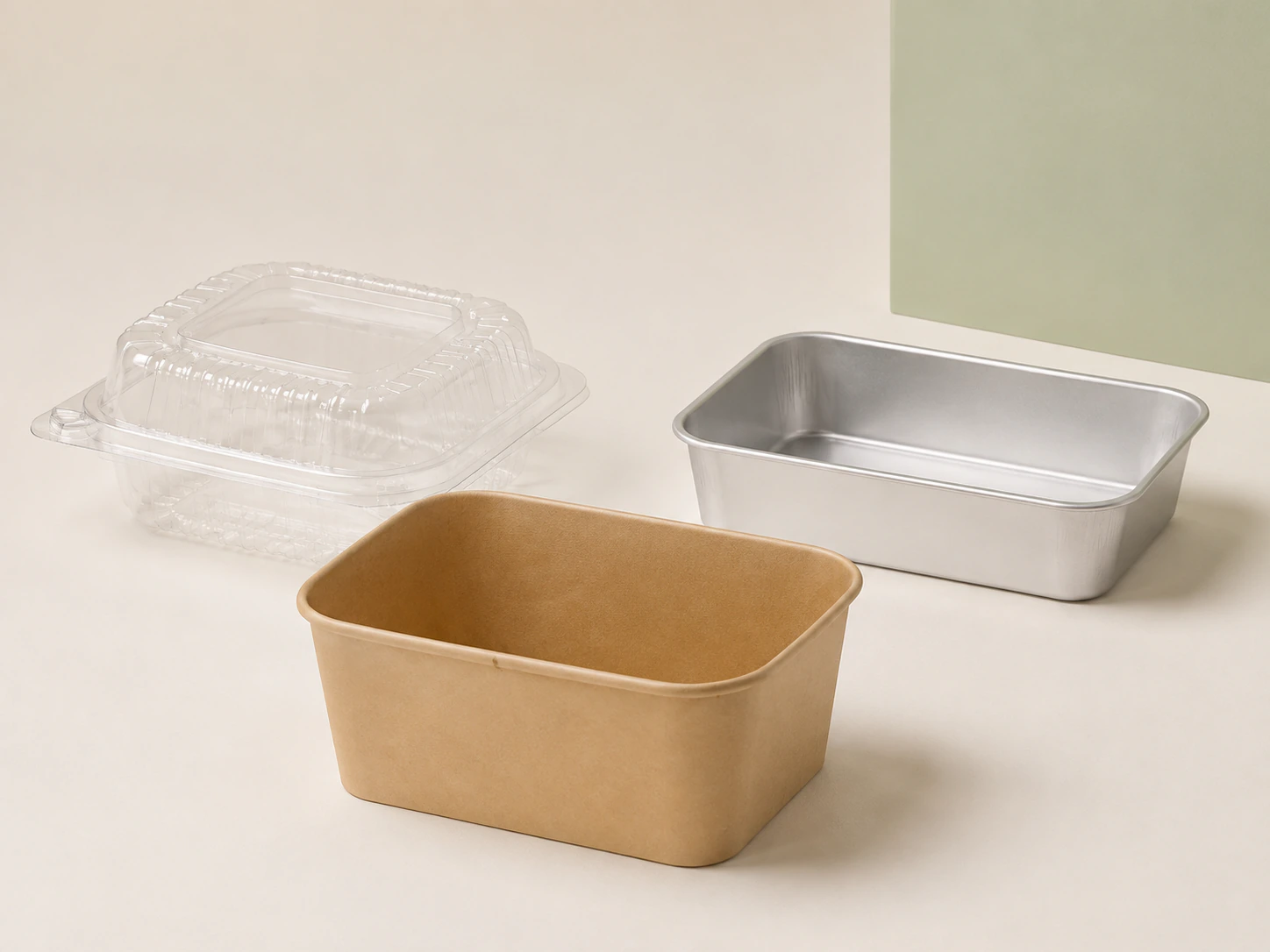
Which measurements belong in a container brief?
State the nominal capacity when it is relevant, then add the dimensions that control product fit. For a rectangular or oval container these may include top length and width, base dimensions and height; for a round format, rim diameter, base diameter and height may matter.
Clarify whether measurements are internal or external and whether they refer to the base alone or the closed pack. When a catalogue value is incomplete, request a drawing or measured sample for the selected model.
- Nominal capacity
- Top or rim dimensions
- Base dimensions
- Overall height
- Internal usable space
- Closed-pack dimensions
Why is nominal capacity not enough?
Two containers with a similar stated capacity can distribute volume differently. A broad, shallow tray and a narrow, deep bowl may behave differently for presentation, portioning, stacking and access even when their nominal volumes appear close.
Define the food shape, filled weight and desired headspace. Headspace may be needed for closing, garnish, movement in transport or a separate lid profile, so the fill line should not be assumed from the brim capacity.
How should compartments be specified?
For divided trays, list the number of compartments and the portion assigned to each one. Add any food-separation requirement and confirm whether divider height continues to the lid or leaves a shared headspace.
A compartment count alone does not show the usable geometry. Review the actual layout with the intended meal, including sauces, side dishes and items that should remain visually separated.
What must be recorded about the lid?
Identify whether the container uses an integrated hinge, folded closure, separate lid or lidding film review. For a separate lid, record its reference alongside the base and confirm whether it changes the overall closed height.
Check closing method, opening experience, stacking and transport orientation with the actual components. Visual similarity or a shared rim measurement should not be treated as compatibility confirmation.
How does size affect packing and freight?
Larger external dimensions and different nesting geometries can change sleeve length, case size and storage requirements. Ask for pieces per pack, packs per case, case dimensions and gross weight for each shortlisted model.
Compare logistics on the same unit basis. A piece price without pack and case information cannot show the full warehouse or freight implication of the format.
What should a size sample test include?
Fill the exact sample with the intended portion using the real packing method. Close it, hold it for the expected interval, stack it as planned and run the normal transport routine before recording the result.
Keep the model reference, base and lid pairing, portion weight and observations together. Confirm specification, packing, documents and commercial terms in writing before ordering.
Common sourcing questions.
- Should buyers specify ounces, millilitres or dimensions?
- Use the capacity unit relevant to the project, but add the usable dimensions, portion and headspace needed to confirm actual fit.
- Can two containers with the same capacity be substituted?
- Not automatically. Shape, usable space, wall geometry, closure, packing and service conditions can differ and should be reviewed by model.
- How should a matched lid be requested?
- List the base and lid references together and ask for compatibility, material, pack quantity and closed dimensions to be confirmed.