
Custom food packaging printing guide for wholesale projects
A print enquiry should define two connected specifications: the packaging item and the artwork applied to it. Lock the base model first, then record colours, coverage, print area, proofing and packing as separate approval points.
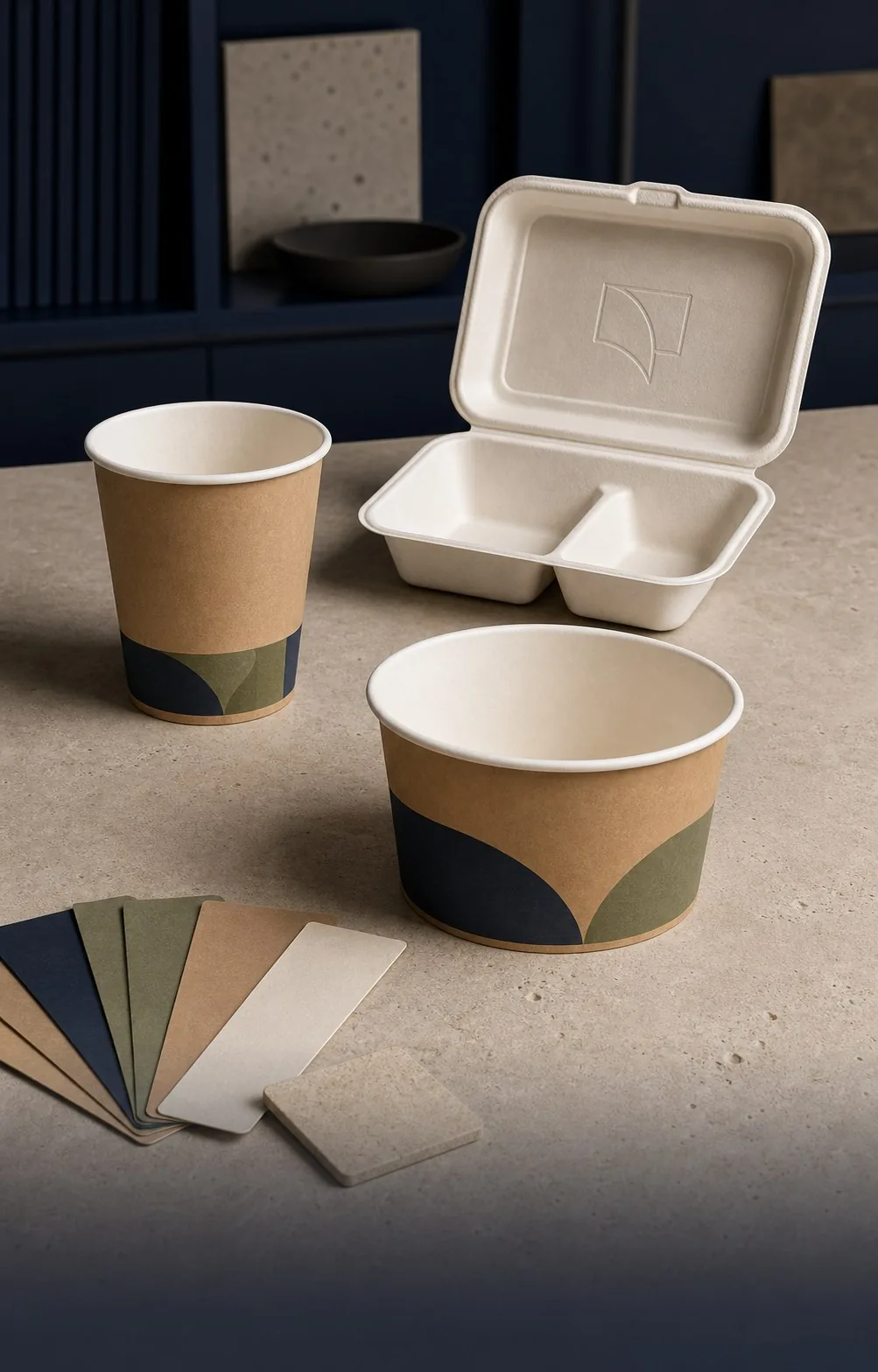
What should be confirmed before artwork starts?
Select the product family, model, size, material and colour before building final artwork. A dieline or print-area file should relate to that exact construction, not a visually similar reference found elsewhere.
Record any matching lid, sleeve, wrapper or bag component that carries branding. If the project includes several sizes, identify which elements remain common and which require separate artwork.
- Base-product model
- Material and product colour
- Print area or dieline
- Matching branded components
- Number of sizes or artwork versions
Which artwork information belongs in the RFQ?
State whether artwork is final, in development or not yet available. Include the number of colours, printed sides, approximate coverage and any variable information such as barcodes, size marks or destination-specific text.
Ask which file types, font treatment, linked images and colour references are required. Keep editable source artwork under version control so the approved file can be identified later.
How should colour expectations be communicated?
Provide a named colour reference when colour consistency matters and identify any approved physical sample. Screen previews are useful for discussion but should not be treated as an exact representation across devices, substrates and print processes.
Ask the supplier to explain the available proof or sample route for the selected project. Record what the approval confirms and what variation may still arise from material, process or production conditions.
What belongs in the proofing and approval record?
Check spelling, regulatory text supplied by the buyer, barcode data, orientation, repeat, print position and the relationship between artwork and seams, folds or closures. Assign one authorized approver and keep the final approval date and file version.
A visual proof and a physical product sample answer different questions. State whether the project needs layout approval, colour review, construction review or a production-representative sample before order release.
How can branding affect packing and assortment?
Confirm whether different designs, languages or sizes will be packed separately or combined. Identify inner-pack presentation, barcode position, carton marks and any rule for keeping artwork versions separated in storage.
For multi-SKU programs, request quantities and case information by design and model. A single total can hide the production and logistics implications of several print versions.
Which commercial terms must be reconfirmed?
Ask for MOQ, price, setup or tooling items, sampling route, lead time and packing to be quoted for the approved base product and artwork scope. These values are project-specific and should not be inferred from another design or unprinted item.
Before production, place the product specification, final artwork, proof approval, packing requirement, destination and agreed commercial terms in one written record.
Common sourcing questions.
- Can final artwork be prepared before the packaging model is selected?
- Concept work can begin, but final artwork should use the print area or dieline for the exact selected model and construction.
- Does a screen proof guarantee the printed colour?
- No. Screen appearance varies, and the material and print process also matter. Agree the appropriate colour reference and approval route for the project.
- What should a final print approval identify?
- It should identify the product model, artwork file and version, colours, print position, required text, approver and approval date.