
Disposable cup sourcing guide for wholesale programs
A cup is part of a system: beverage, rim, lid, decoration and case pack. Define those parts together to avoid comparing products that only look equivalent in a catalogue.
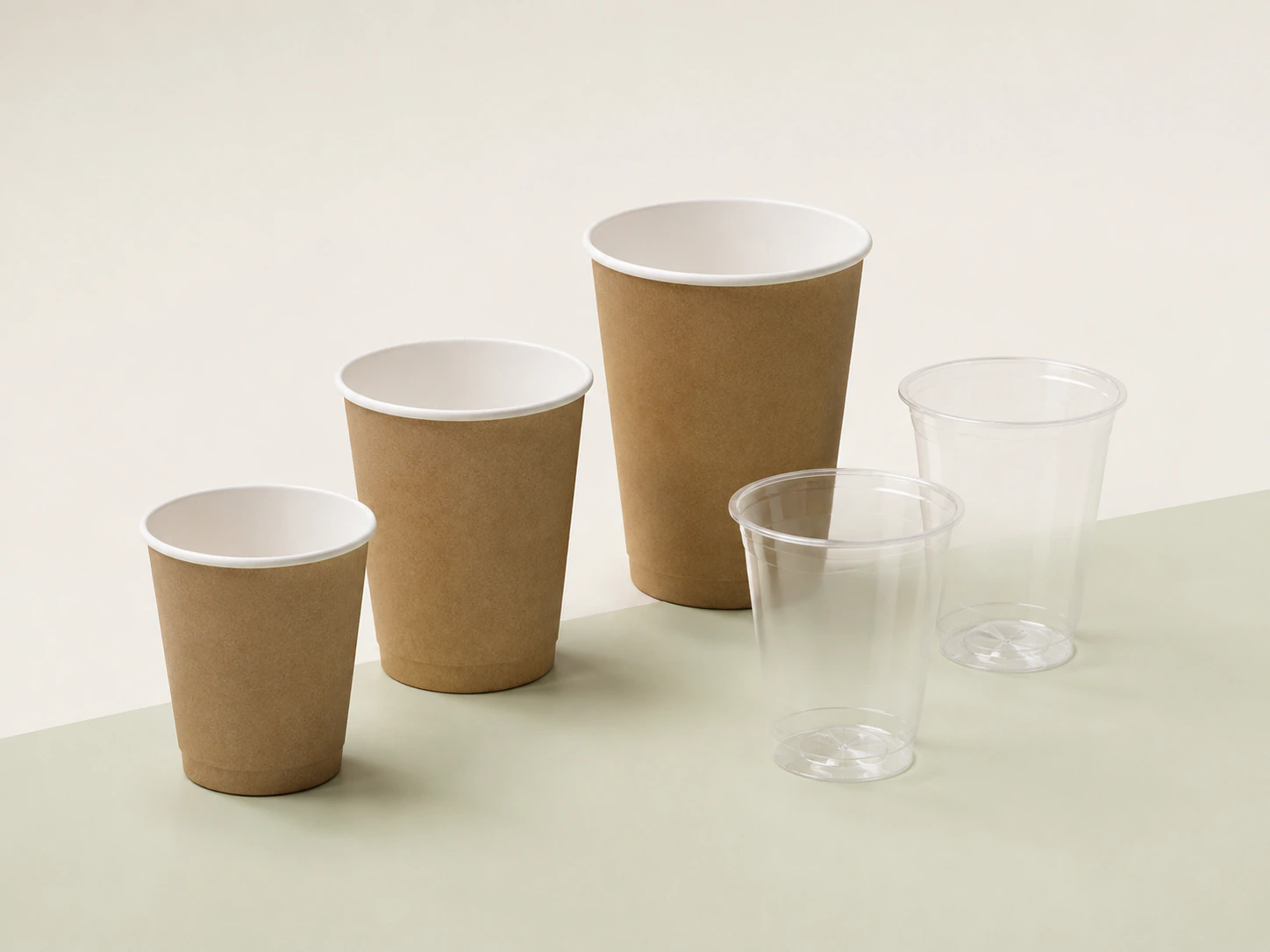
Begin with the beverage and service journey.
State whether the cup is intended for a hot drink, cold drink, milk tea, delivery, event service or prepared retail display. Include the expected serving temperature and how long the filled cup is likely to be carried or stored.
These conditions belong in the brief even when a familiar cup size has already been selected. Intended use should be confirmed for the exact material and model.
Compare material in context.
The ANWELLUP range groups paper and kraft cups with PP and PET drinkware. Each family has different model references, dimensions and packing fields, so the material name alone is not a complete specification.
For a useful comparison, ask for the cup construction, wall format, colour or clarity, dimensions, weight where applicable and the matching-lid reference. Keep environmental or disposal claims separate unless the exact evidence and local collection context are available.
- Beverage and serving temperature
- Paper, PP or PET family
- Single-wall or double-wall format where relevant
- Colour, clarity or surface requirement
- Required supporting documents
Treat capacity and lid fit as model-specific.
Nominal volume helps narrow the range, but lid fit depends on the actual rim and model dimensions. Record the selected cup and lid as a matched pair and confirm whether the lid style suits the drinking and delivery format.
If the program uses more than one cup size, identify which sizes are expected to share a lid and request that compatibility in writing.
Prepare the artwork brief.
For custom printed cups, provide the artwork status, number of colours, print coverage and the visual result you expect. Ask for the available decoration method and printable area for the exact cup construction.
Colour references, barcodes and regulatory copy should be supplied as controlled artwork. Include who will approve the proof and whether a physical sample is required before production.
Check packing and operational fit.
A case pack affects storage, replenishment and freight calculations. Confirm pieces per sleeve, sleeves per case, case dimensions and gross weight when those details are needed for the buying decision.
Ask how lids are packed and whether cups and lids will ship in the same order. For multi-SKU programs, provide the quantity by size rather than one combined total.
Use samples to verify the complete system.
A sample review should use the intended cup, matching lid and, where possible, the actual beverage and service routine. Record the model references tested so the commercial order can be tied back to the review.
The final quotation should identify the models, specification, artwork scope, case pack, MOQ, price, lead time and document availability that apply to the program.
Common sourcing questions.
- Is cup capacity enough to identify a model?
- No. Include the material, construction, dimensions and required lid because similar nominal capacities can belong to different cup systems.
- What should I provide for a printed cup quote?
- Provide the cup model or target specification, quantity by size, artwork, colour count, print coverage, destination and required packing.
- Can one lid be assumed to fit several sizes?
- Only when compatibility has been confirmed for those exact models. Record cup and lid references together in the RFQ and sample review.